Who we are
Surgeons, researchers, academics, physiotherapists, engineers, innovators...
Our mission is to improve orthopedic care using an evidence-based approach,
which starts with quality data.
Patient-focused and research-minded
We believe that understanding and improving clinical outcomes is not possible without following our patient's experience.
Long-term outcomes are deeply multifactorial, but the patient perspective is central in defining a treatment’s success.
Value efficiency
We believe that minimizing the time, resource, and financial burden for longitudinal research is the key to sustainable and high-quality data collection.
Why should caring come at a cost?
We believe that research opportunities should be widely accessible, and that data ownership should stay in the hands of the practitioner who went the extra mile to collect it.
To maximize collaboration and data re-use opportunities, we also believe that data should have value for all stakeholders.
To help you get the most out of your data, we make sure that data follows the FAIR principles:
Findable, Accessible, Interoperable, and Reusable.
Findable: The MyOrthoData data structure keeps data organized and machine-readable, so they can be easily located for use.
Accessible: We use REDCap and Grafana — two widely supported, open-source platforms used worldwide. These strong ecosystems ensure data formats remain sustainable and portable, so your data can always be securely stored and migrated.
Interoperable: Data is structured in standard formats and ontologies when possible (ICD-10, SNOMED-CT, and official product codes) to maximize data quality and semantic interoperability. This formatting also supports easier data transfer to existing data management systems, via manual or API-mediated pathways. Speak to your IT team about creating a direct link between MyOrthoData and existing systems.
Reusable: Data are and meta-data are collected and exported in sustainable and intuitive formats (CSV, XML, and more), to ensure long-term usability across systems.
We value sustainability and interoperability
Wondering if you can link your other registration systems to our platform? Let us know, so we can explore the possibility.
A structure built for scaling
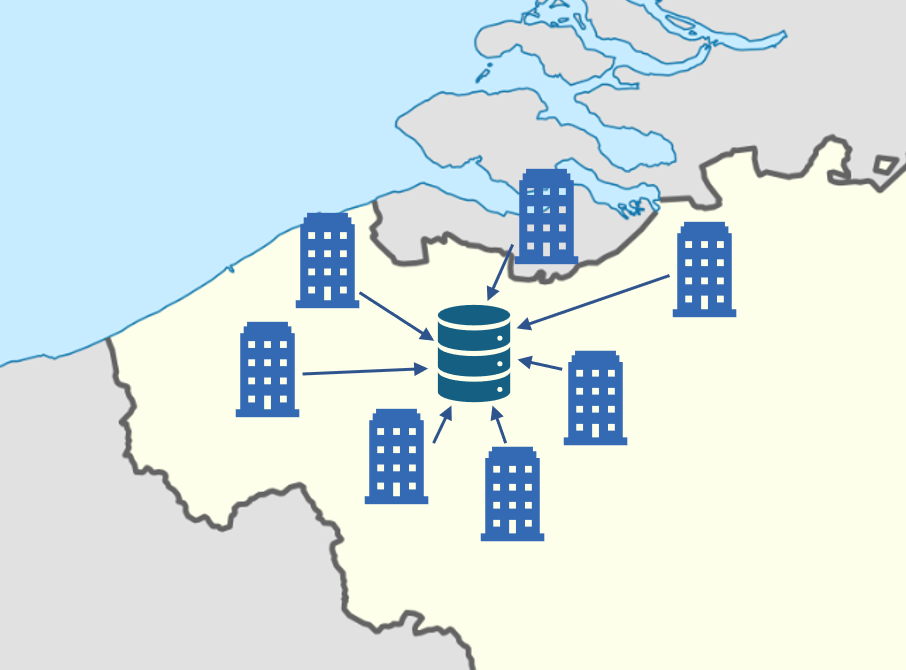
We offer data storage at several research facilities via a series of centralized networks.
A central institution, or data hub, stores data for multiple institutions who comply with the same regulatory requirements.
This approach offers a selection of data protection profiles without compromising interoperability, and ensures an up-to-date interface for all collaborators.